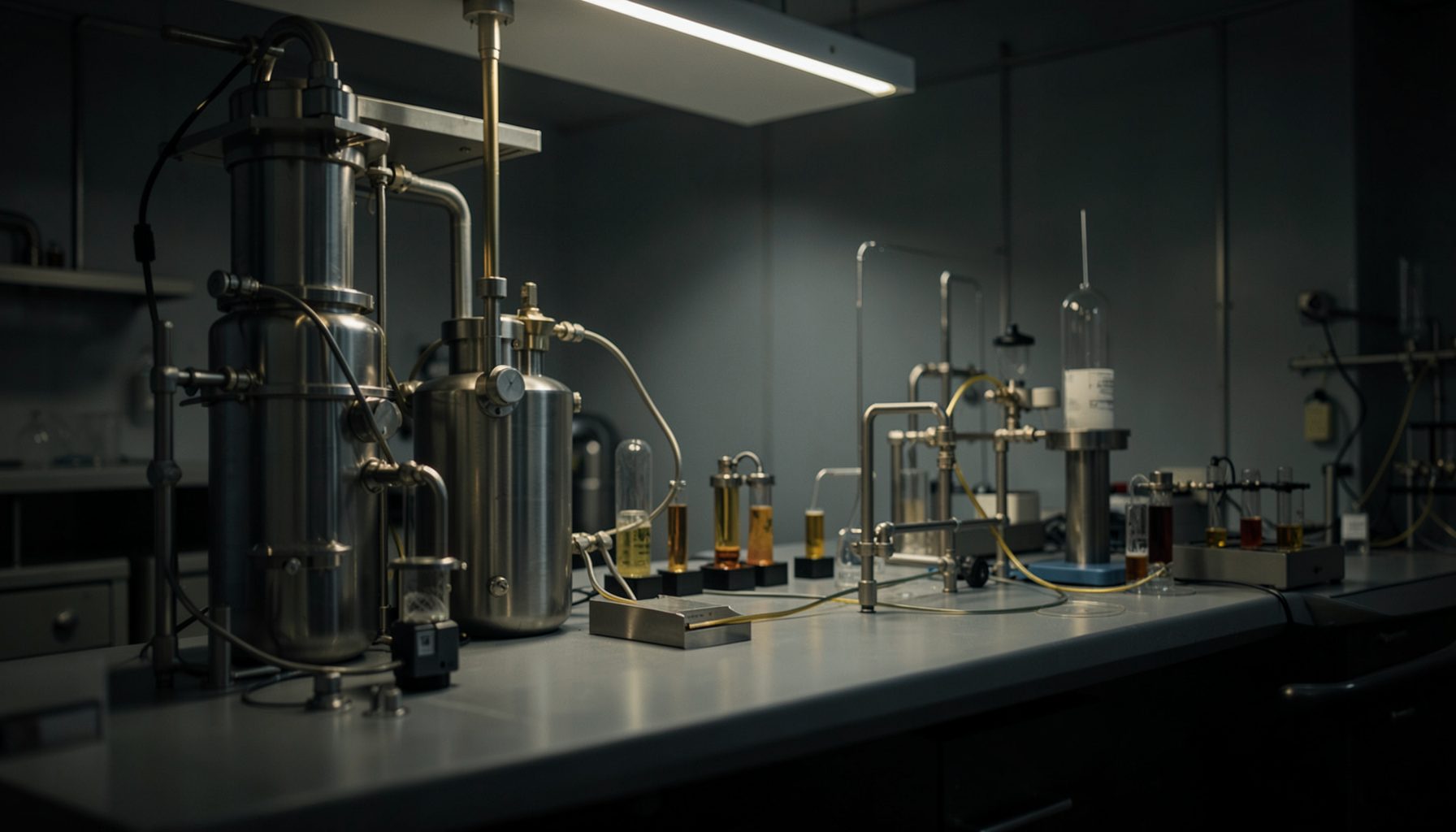
The ElectroSAnMBR project is organised into distinct work packages, each addressing a specific phase of research and development. Together they span the full lifecycle of the project, from management and coordination through to the technical realisation of the e-SAnMBR system.
Project Management
Coordination, administrative oversight, and reporting activities ensuring the project meets its objectives on schedule and within the framework of the Marie Skłodowska-Curie grant agreement.
Electrode Manufacture & Characterisation
Focused on the fabrication and testing of novel electrodes for integration within the electrochemical cell component of the e-SAnMBR system.
Batch Operation & Integration
Batch-mode operation of the integrated electrolysis cell within an anaerobic digestion system, evaluating performance under controlled laboratory conditions.
Continuous Operation & Comparison
Continuous operation of both conventional SAnMBRs and the novel e-SAnMBR, enabling direct performance comparison for bilge water treatment.
How the work packages connect
WP1 provides the management backbone across the entire 24-month programme. The technical work packages (WP2–WP4) proceed sequentially: electrode development informs batch trials, which in turn feed into the continuous-operation comparison that forms the core experimental output of ElectroSAnMBR. Detailed outputs from each work package are documented in the Deliverables section.
The ElectroSAnMBR project is organised into distinct work packages that collectively guide the research from initial coordination through to final demonstration. WP1 establishes the project management framework, overseeing administrative tasks, reporting obligations, and timeline adherence across the full duration. This foundational package ensures that all partners remain aligned with the Marie Skłodowska-Curie grant requirements and that deliverables are submitted on schedule. Effective communication among the consortium members, risk monitoring, and financial oversight are central to this work package, providing the structure needed for the technical packages to proceed efficiently and without administrative delays.
WP2 focuses on the manufacture and characterisation of electrodes specifically designed for the electrochemical anaerobic membrane bioreactor system. This work package involves the selection of suitable materials and the fabrication of electrode assemblies that can withstand the conditions of wastewater treatment while maintaining high electrochemical activity. Characterisation techniques are applied to evaluate surface properties, conductivity, and long-term stability under operational conditions. The outcomes of this package directly inform the design of the integrated e-SAnMBR system, ensuring that the electrochemical cell performs reliably when coupled with the submerged anaerobic membrane bioreactor.
Subsequent work packages address the integration of the electrochemical cell with the submerged anaerobic membrane bioreactor and the validation of the combined system under real-world conditions. These technical packages involve batch and continuous operation trials, monitoring of organic pollutant removal efficiency, and assessment of membrane performance alongside electrolysis. Analytical methods developed within the project are applied to determine the fate of emerging contaminants and to evaluate overall treatment efficacy. The results feed into process optimisation, scaling considerations, and the preparation of guidelines for potential deployment in municipal or industrial water treatment applications.